Atlas of Battles

battle, major, interwar and Second World War

Battle of Shanghai

Battle of Shanghai was a battle fought on 13 August 1937 at Shanghai, in what is now Taiwan; it lasted 3 months. It was part of Second Sino-Japanese War, which ran from 1937 to 1945. The recorded result: Japanese victory.

See it on the globe Read the article

The Imperial Japanese Navy (IJN) Special Naval Landing Forces troops in gas masks prepare for an advance in the rubble of Shanghai, China.
The Imperial Japanese Navy (IJN) Special Naval Landing Forces troops in gas masks prepare for an advance in the rubble of Shanghai, China.. Unknown photographer, Ministry of the Navy, Public domain, via Wikimedia Commons.
Fought13 August 1937lasted 3 months
WhereShanghai, Taiwan31.232N, 121.469E
OutcomeJapanese victory
BelligerentsRepublic of China (1912–1949)againstEmpire of Japan
Part ofSecond Sino-Japanese War1937 to 1945

Where it sits in Second Sino-Japanese War

Japanese invasion of Manchuria, 1931Jiangqiao campaign, 1931Jinzhou Operation, 1931Defense of Harbin, 1932Battle of Wenzaobang, 1932Suiyuan Campaign, 1936Battle of Nanking, 1937Bombing of Songjiang, 1937Siege of Shanghai, 1937Battle of Luodian, 1937Bombing of Nanjing, 1937Marco Polo Bridge incident, 1937Battle of Beiping–Tianjin, 1937Operation Chahar, 1937Battle of Zhangjiakou, 1937Battle of Nankou, 1937Battle of Shanghai, 1937Bloody Saturday (Shanghai), 1937Battle of Wusong, 1937Battle of Taiyuan, 1937Battle of Datong, 1937Battle of Jining, 1937Battle of Xinkou, 1937Battle of Pingxingguan, 1937Defense of Sihang Warehouse, 1937Battle of Jinshanwei, 1937USS Panay incident, 1937Amoy Operation, 1938Bombing of Chengdu, 1938Defense of Linyi, 1938Siege of Xuzhou, 1938Battle of Northern and Eastern Henan, 1938Bombing of Chongqing, 1938Defense of Teng County, 1938Battle of Taierzhuang, 1938Battle of Xuzhou, 1938Canton Operation, 1938Battle of Wuhan, 1938Battle of Changsha, 1939Swatow Operation, 1939Hainan Island Operation, 1939Battle of Nanchang, 1939Battle of Suixian–Zaoyang, 1939Battle of South Guangxi, 1939Battle of Baotou, 1939Battle of Kunlun Pass, 1939Battle of West Suiyuan, 19401939–1940 Winter Offensive, 1940Battle of Wuyuan, 1940Battle of Zaoyang–Yichang, 1940Hundred Regiments Offensive, 1940Battle of South Henan, 1941Battle of Shanggao, 1941Battle of South Shanxi, 1941Battle of Changsha, 1941proposed Japanese invasion of Sichuan, 1942Battle of Changsha, 1942Battle of Tachiao, 1942Battle of Oktwin, 1942Battle of Toungoo, 1942Battle of Yenangyaung, 1942Battle of Lashio, 1942Battle of Yunnan-Burma Road, 1942Battle of West Hubei, 1943Battle of Northern Burma and Western Yunnan, 1943Battle of Changde, 1943Battle of Longling, 1944Battle of Dushan, 1944Battle of Central Henan, 1944Operation Ichi-Go, 1944Battle of Changsha, 1944Defense of Hengyang, 1944Battle of Guilin–Liuzhou, 1944Second Guangxi campaign, 1945Battle of West Hunan, 194519311945Battle of Shanghai, 1937
77 placed engagements of Second Sino-Japanese War in time order; taller ticks are more widely documented. Each tick is a link.

Record

Date13 August 1937
to 26 November 1937
PlaceShanghai, Taiwan
31.232N, 121.469E
KindBattle, interwar and Second World War
Territorial changeJapanese capture of Shanghai (excluding the Shanghai International Settlement and the Shanghai French Concession)
Strength700,000 troops; 70 divisions; 7 brigades; 180 aircraft; 70 tanks300,000 troops; 9 divisions; 1 brigade; 500 aircraft; 300 tanks; 130 naval ships
Casualties and lossesChinese Report dated November 5, 1937, to the War Council: 187,200 killed and wounded; Chinese Ministry of Military Affairs: estimated 300,000 casualties; Japanese Estimates: By late October : 250,000 killed and wounded; By the end of October : 81,000 killedOfficial Japanese war records: 47,000+ (42,202+ including at least 11,072 killed in action before November 8. After that, there is additional 4,785 casualties for the 9th division alone before December 1); this figure does not include the sick, the repatriated and those who died because of injuries; 2017 Western Estimate: 18,800 combat killed (about 17,000 plus about 1,800 illness-induced deaths), 35,000–40,000 wounded, and 40,000 sick, KIA figure seconded by General Iwane Matsui's Speech in 1938
Commanders
  • Heisuke Yanagawa
  • Iwane Matsui
  • Kiyoshi Hasegawa (admiral)
Battle of ShanghaiBattle of ShanghaiBloody Saturday (Shanghai)Defense of Sihang WarehouseBattle of WoosungBattle of LizeBattle of ChapooBloody Saturday (Shanghai)Battle of WoosungBattle of LizeBattle of ChapooHangzhouWuxiSuzhouChangzhouHuzhouJiaxingNantong100 km31.232N, 121.469E
The recorded site, with the nearest other engagements in the atlas. Present-day coastlines, rivers and borders; towns from Natural Earth.

The ground today

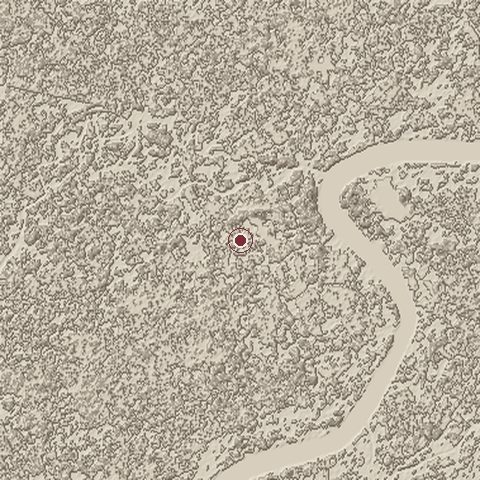
Relief of the ground around the site of Battle of Shanghai
Relief within about 10.0 km of the site, contours every 5 m. Copernicus DEM GLO-30, ESA.
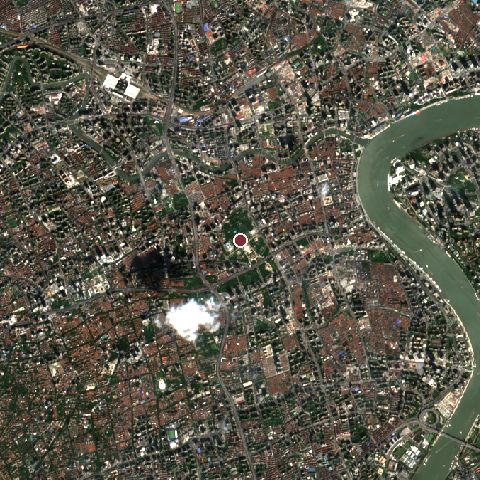
Satellite view of the site of Battle of Shanghai today
The same ground from Sentinel-2 on 2025-09-16. Contains modified Copernicus Sentinel data 2025.

The recorded site stands at about 7 m; within 10.0 km the ground runs from -6 to 41 m, 47 m of relief, gently rolling country and today it is 82% built-up, 11% tree cover, 5% water.

built-up: 82%tree cover: 11%water: 5%built-up 82%tree cover 11%water 5%
west to east, 10.0 km0 to 22 mnorth to south, 10.0 km0 to 21 m
Elevation from the Copernicus DEM GLO-30 (ESA, Airbus); land cover from ESA WorldCover 2021 (CC BY 4.0), within about 5 km of the recorded site. Computed, not recorded.

Nearest engagements

In the same war

Elsewhere in 1937

Battle of Shanghai is one of 4,429 engagements of the 20th century in the atlas and one of 50 in present-day Taiwan.

Sources

Identity, coordinates, dates and the war from Wikidata Q254599, released under CC0. Result, belligerents, commanders, strength and casualties from the infobox of the English Wikipedia article Battle of Shanghai, revision 1385203638, read 2026-11-14, licensed CC BY-SA 4.0; the article's text is not reproduced here. Present-day country and state from Natural Earth. Dates before 1582 follow the Julian calendar as recorded.